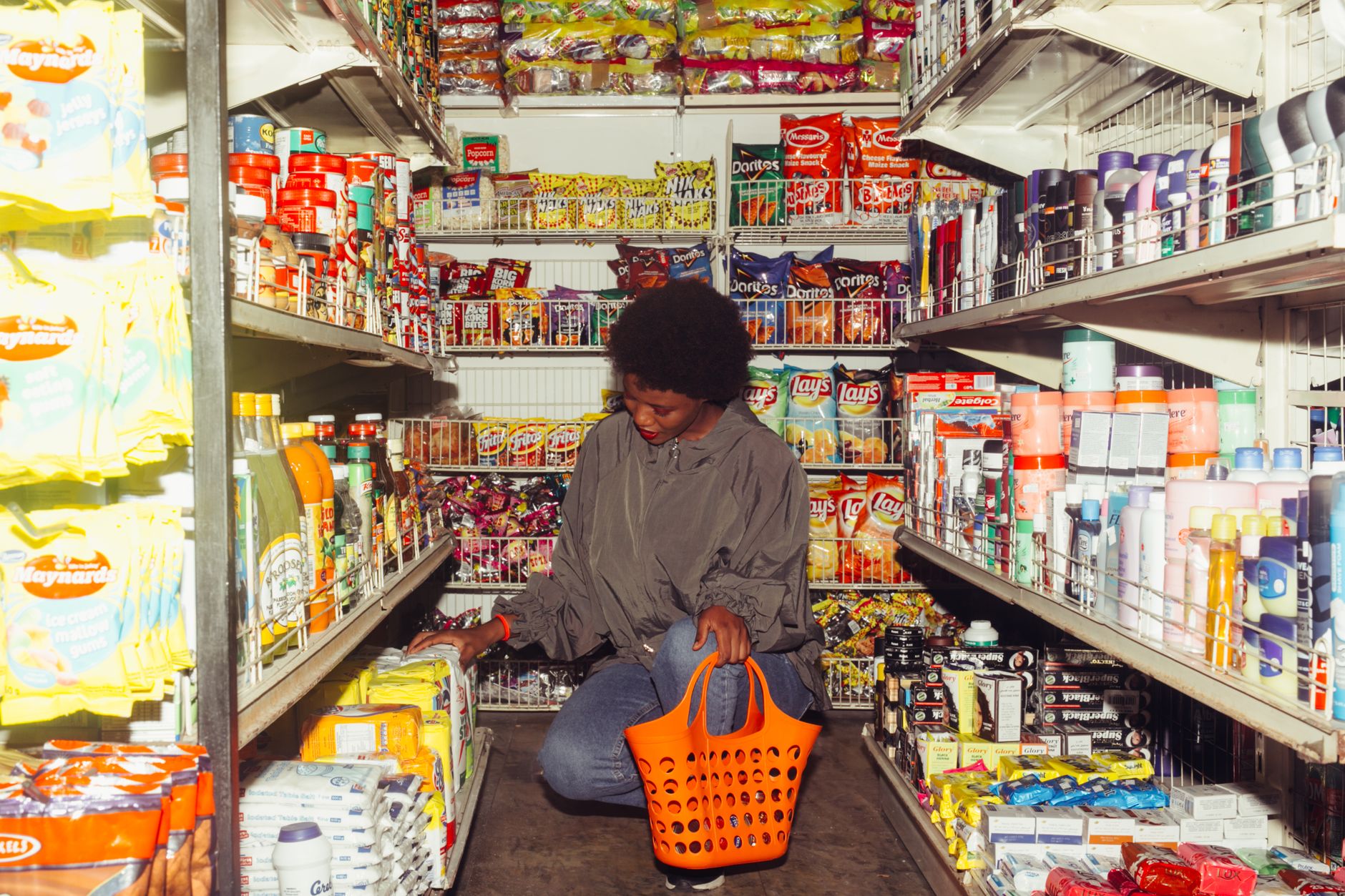
Cooking for one has real perks: no negotiating over dinner, no wasted trips to please picky eaters, total control of your plate. But at the checkout, it can feel like the system is quietly working against you. If you have been searching for how to save money on groceries for one person, you have probably noticed the frustrating truth already — food is packaged, priced, and marketed for families, and going solo often means paying more per meal and tossing more into the bin. The good news: with a few small changes to how you plan, shop, and store food, you can cut your grocery spend without eating worse. Here are 12 practical tactics that work in almost any country, currency, or kitchen.
Why Groceries Cost More Per Person When You Shop for One
There is an unofficial “single tax” on solo grocery shopping, and it comes from two directions.
First, packaging. Bread, produce, meat, and pantry goods are usually sold in family-sized quantities. A loaf of bread, a bag of spinach, or a family pack of chicken thighs is easy for four people to finish before it spoils — and a race against the clock for one.
Second, waste. This is where solo shoppers get hit hardest. According to the UNEP Food Waste Index Report 2024, households generate around 60% of global food waste — about 631 million tonnes in 2022 — and roughly two-thirds of home food waste is food that spoiled unused rather than scraps. The USDA estimates that 30–40% of the US food supply is wasted, with a family of four losing around $1,500 a year to uneaten food. When you buy family-sized packs but eat like one person, that waste rate is often proportionally worse.
The takeaway is encouraging, though: most of the money leaks out through spoilage and impulse buys, not through the base price of food. Those are exactly the things you can control.
Start Before You Shop: Plan and Inventory
The cheapest trip to the store is the one where you buy only what you will actually eat. That starts at home, before you grab your keys.
Do a 2-Minute Fridge and Pantry Check
Before you write a list, open the fridge, freezer, and cupboards and take a quick inventory. You are looking for two things: what needs using up soon, and what you already own. This one habit quietly kills two expensive mistakes — buying a third jar of cumin you forgot you had, and letting half a bag of carrots turn to mush. Build your meals around what is already on hand first, then fill the gaps.
Plan 2–3 Repeatable Meals, Not Seven
You do not need seven different dinners. Planning a full week of unique meals leads to buying a dozen single-use ingredients, most of which you will only partly use. Instead, plan 2–3 repeatable meals and rotate them. Repetition is your friend when cooking for one:
- You buy fewer ingredients, and you finish them.
- Shared ingredients (an onion, a bag of rice, a block of tofu) get used across multiple meals.
- Cooking gets faster because you already know the recipes.
Plan those meals around what is on sale and what is in season where you live — seasonal produce is usually cheaper and better.
Write a List — And Never Shop Hungry
Once you know what you have and what you are cooking, write a list and stick to it. Then eat something before you go. Shopping hungry and shopping without a list are both linked to spending more — some surveys suggest roughly $26 extra on a single trip, and while the exact figure varies, the direction is clear: an empty stomach makes everything look like a good idea.
What worked for me: I used to “just pop in” for a couple of things after work, hungry, with no list. I would leave with a bag of stuff and still have nothing that made a meal. Switching to one planned shop a week, right after a snack, cut my spending noticeably and — weirdly — meant I ate better, because everything I bought had a purpose.
Smart Shopping at the Store
Once you are in the aisles, a few habits help you get more food for less money.
Read the Unit Price, Not the Sticker Price
The big number on the shelf tag is the sticker price. The small number — usually the price per ounce, per 100g, or per litre — is the unit price, and it is the one that tells you the real deal. Comparing unit prices lets you see past clever packaging. For a solo shopper, the unit price has a hidden rule attached: a bigger pack is only cheaper if you actually finish it before it spoils.
Switch to Store/Private-Label Brands
One of the easiest wins is swapping name brands for the store’s own private-label version. Store brands typically cost noticeably less than comparable national brands — often in the range of 20–40% less, though it varies by product and region — and in blind taste tests they frequently match the brand-name version. Start with the low-risk staples — canned tomatoes, beans, rice, pasta, flour, frozen vegetables, cleaning supplies.
Buy Loose Produce and “Buy for One” Quantities
Pre-bagged produce forces a quantity on you. Loose produce lets you buy exactly what you need — two apples, one onion, a single sweet potato — so nothing rots in the drawer. Whenever a store offers a “buy for one” option, take it: loose fruit and vegetables, the butcher or deli counter for a single portion, bulk bins for small amounts of grains and beans.
When Bulk Buying Actually Pays Off (and When It Doesn’t)
Bulk buying is not automatically a saving for one person — it depends entirely on whether the item spoils. Bulk usually pays off for non-perishables (rice, dried pasta, beans, canned goods), household basics (toilet paper, dish soap), and anything you can freeze in portions. It backfires for fresh produce you cannot finish, short-shelf-life dairy and bakery items, and anything “on offer” you would not have bought at full price. The rule: buy in bulk only when the item is shelf-stable, freezable, or something you reliably use up.
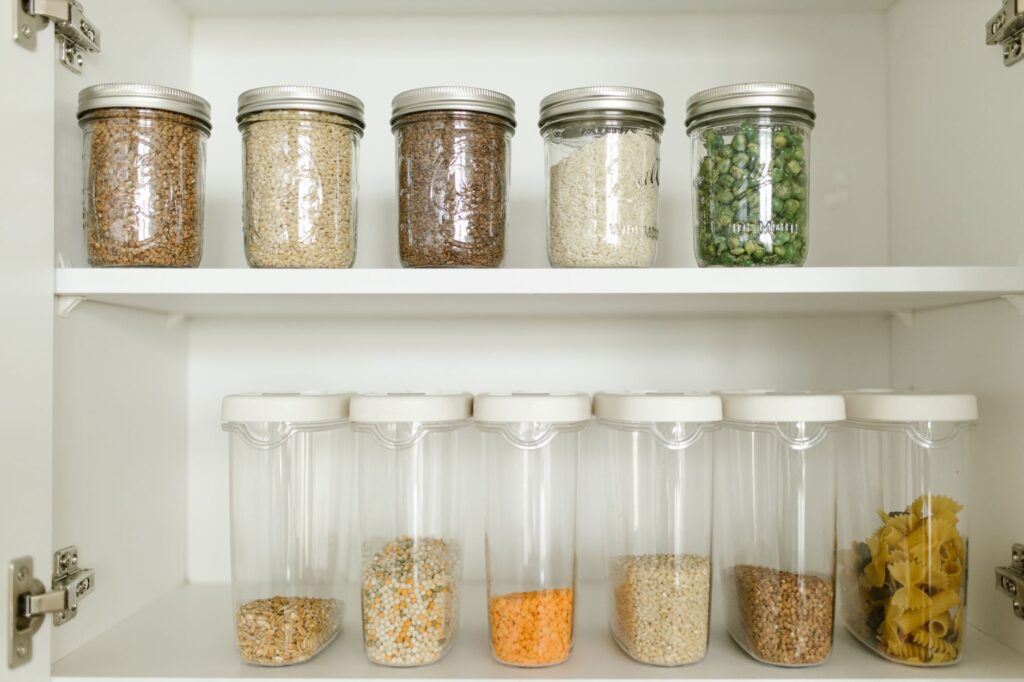
Build Your Budget-Friendly Staples Pantry
A well-stocked pantry is what lets you cook cheaply on autopilot. When the base of your meals is already in the cupboard, you buy less on each trip.
Cheap, Long-Life Staples to Keep Stocked
- Grains and starches: rice, pasta, oats, couscous.
- Canned goods: tomatoes, beans, chickpeas, tuna, corn.
- Dried legumes: lentils, split peas, dried beans.
- Flavor bases: stock cubes or powder, onions, garlic, cooking oil, basic spices.
Because these keep so long, stocking up when they are discounted is one of the safest ways to buy in bulk as a solo shopper.
Plant Proteins That Outlast Meat
Fresh meat is one of the fastest things to spoil and one of the more expensive things in your cart. Beans, lentils, chickpeas, and tofu are cheap, filling, and last far longer than fresh meat. You do not have to go fully meat-free; even swapping two or three dinners a week to a lentil curry or a bean chili adds up over a month.
Cook and Store to Waste Nothing
How you cook and store food matters just as much as how you buy it.
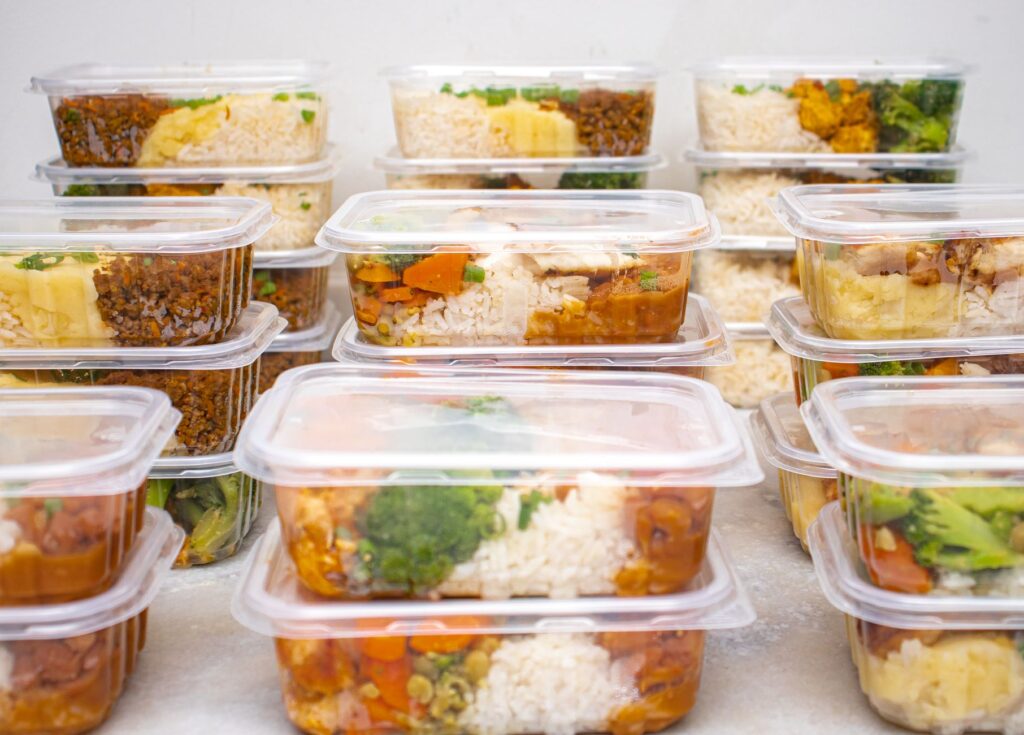
Batch-Cook Base Meals, Portion, and Freeze
Cooking one portion at a time is inefficient. Instead, batch-cook base meals and freeze them in single portions. Dishes that freeze well include soups, stews, chili, curries, and cooked grains like rice. Make a big pot, divide it into single-serving containers, and freeze. Aim to use frozen home-cooked meals within about three months for the best quality.
Cook Once, Eat Twice
When you cook dinner, make enough for two portions and save the second for tomorrow’s lunch. “Cook once, eat twice” turns one round of cooking and cleanup into two meals, and it quietly replaces expensive bought lunches.
Label and Date Everything in the Freezer
A freezer is only a money-saver if you actually eat what is in it. Label every container with what it is and the date you froze it. This lets you rotate older meals to the front and treat your freezer like a personal ready-meal aisle. The freezer is also your pause button for perishables — freeze half a loaf of bread or portions of meat before they spoil.
Curb Impulse Buys and Track Spending
Impulse buys are where careful plans quietly fall apart. A few defenses that work:
- Shop with a list and a full stomach.
- Shop less often. Fewer trips mean fewer chances to impulse buy.
- Give yourself a small treat budget. Banning treats entirely tends to backfire.
- Track what you spend. Keep receipts or jot totals in your phone for a month.
Tracking is not about guilt. It is about information. Once you can see where the money goes, the fixes usually become obvious.
A Simple Weekly Routine to Save Money on Groceries for One
- Check your fridge, freezer, and pantry (2 minutes).
- Plan 2–3 repeatable meals around what you have, what is on sale, and what is in season.
- List exactly what you need to fill the gaps.
- Snack before you leave.
- Shop once, comparing unit prices and reaching for store brands.
- Batch-cook one base meal and portion it into the freezer.
- Label and date everything you store.
- Track your total, and adjust next week.
Run this loop for a month and it becomes second nature.
FAQ
How much should one person budget for groceries?
There is no universal number — it depends on where you live, local prices, and your diet. Track your own spending for a month to find your baseline, then aim to trim it gradually.
Are warehouse clubs worth it for one person?
Sometimes — but only for shelf-stable and freezable goods: rice, canned goods, paper products, and meat you portion and freeze right away. It is usually a poor deal for fresh produce you cannot finish alone.
What foods freeze well for solo cooks?
Soups, stews, chili, curries, and cooked grains freeze and reheat excellently in single portions. Bread, portioned raw meat, and cheese also freeze well. Use home-cooked frozen meals within about three months, and always label with the date.
Sources
- UNEP, Food Waste Index Report 2024: https://www.unep.org/news-and-stories/press-release/world-squanders-over-1-billion-meals-day-un-report
- USDA, Food Loss and Waste: https://www.usda.gov/about-food/food-safety/food-loss-and-waste
- ReFED; PennyHoarder; Consumer Reports; MSU Extension; AARP; NDSU Extension; StudyFinds/phys.org; Love Food Hate Waste; MoneyTalksNews
This article is for general informational purposes only and does not constitute professional legal, tax, medical, or financial advice. Please verify details with official sources or a qualified professional.
Leave a Reply